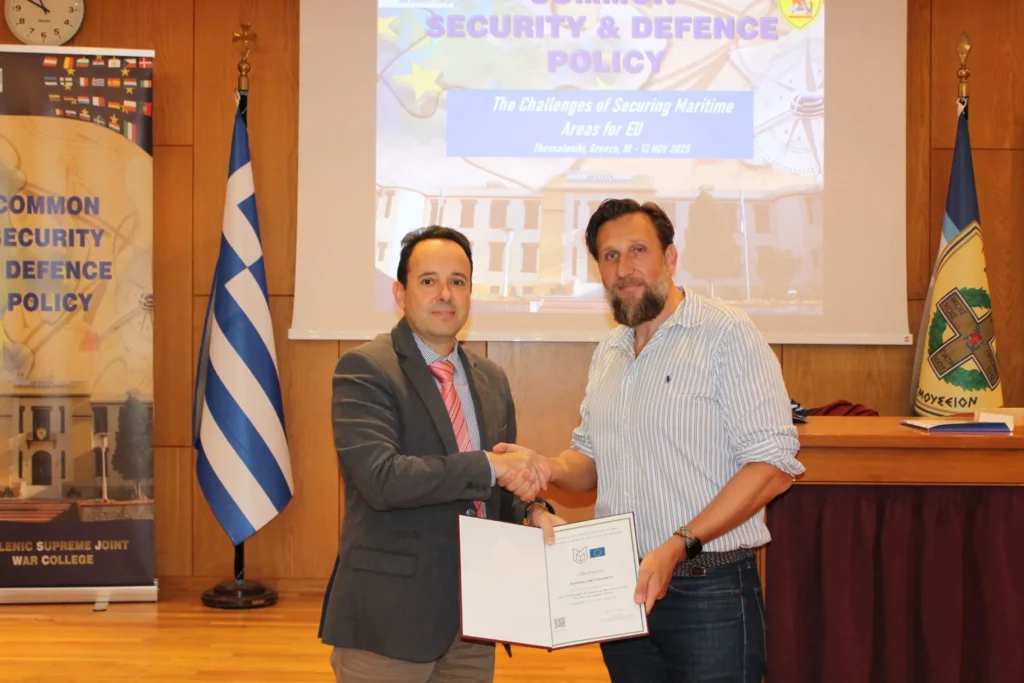
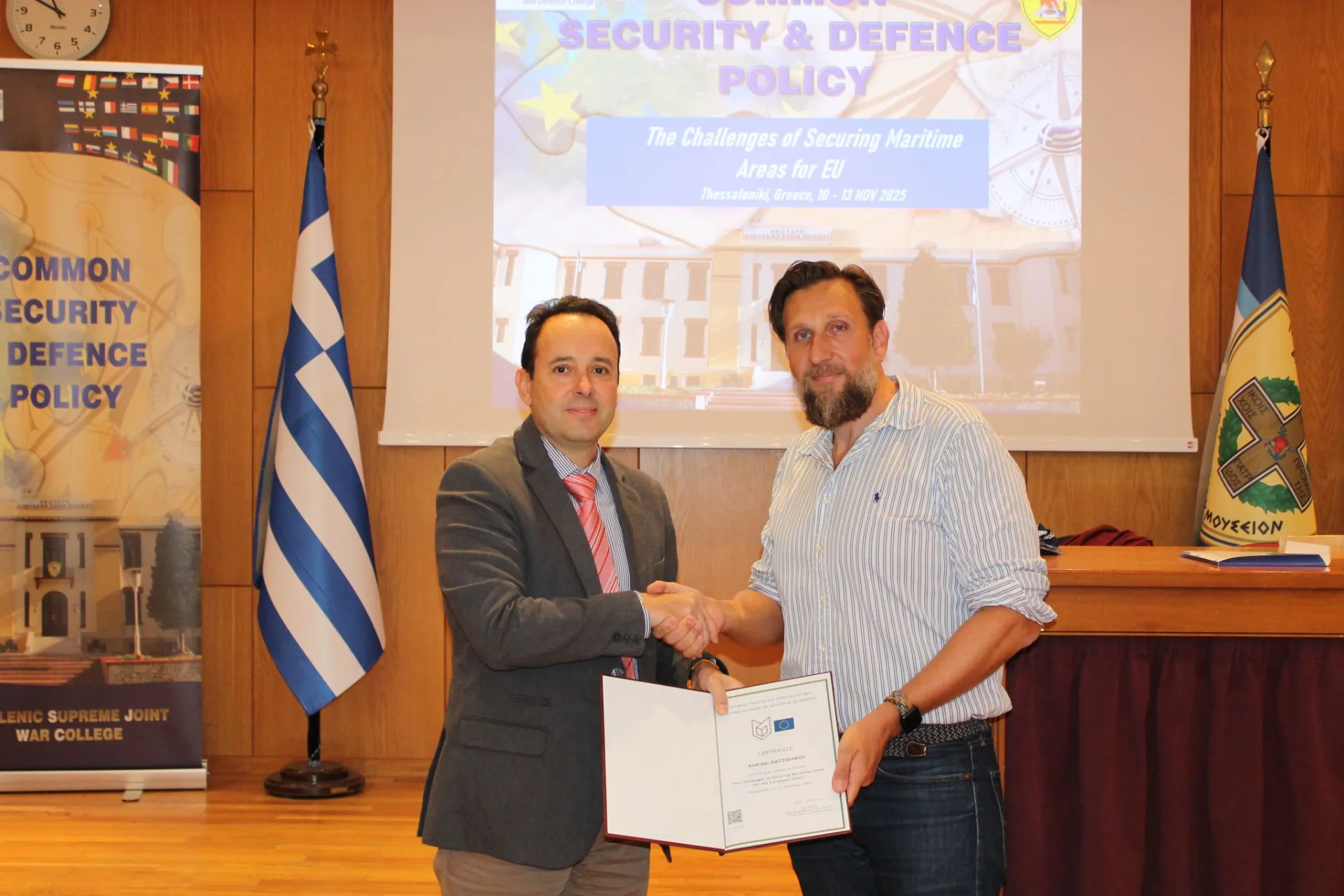
Speaking at the European Security and Defence College (ESDC) course (Thessaloniki, 10-13 November) on “𝑻𝒉𝒆 𝑪𝒉𝒂𝒍𝒍𝒆𝒏𝒈𝒆𝒔 𝒐𝒇 𝑺𝒆𝒄𝒖𝒓𝒊𝒏𝒈 𝑴𝒂𝒓𝒊𝒕𝒊𝒎𝒆 𝑨𝒓𝒆𝒂𝒔 𝒇𝒐𝒓 𝒕𝒉𝒆 𝑬𝑼”, I highlighted a critical reality: the EU’s maritime domains face interconnected threats – from piracy to terrorism, smuggling & arms trafficking – across three strategic theaters.
The EU deploys 𝐄𝐔𝐍𝐀𝐕𝐅𝐎𝐑 𝐀𝐬𝐩𝐢𝐝𝐞𝐬 🛡️ in the Red Sea and Strait of Hormuz, 𝐄𝐔𝐍𝐀𝐕𝐅𝐎𝐑 𝐀𝐭𝐚𝐥𝐚𝐧𝐭𝐚 ⚔️ across the Indian Ocean and Horn of Africa, and 𝐄𝐔𝐍𝐀𝐕𝐅𝐎𝐑 𝐈𝐫𝐢𝐧𝐢 🕊️ in the Mediterranean – protecting trade routes, disrupting piracy networks, enforcing arms embargoes, and countering maritime terrorism.
These aren’t isolated operations – they’re the EU’s integrated approach to maritime resilience and deterrence.
🚨 The challenge? Threats evolve faster than policy responses. When Houthi attacks escalate in the Red Sea, political focus and resources shift dramatically – leaving the Horn of Africa under-resourced while piracy networks resurge and smuggling networks expand. Tactical urgency crowds out a coordinated long-term maritime security architecture.
The CSDP isn’t just about naval presence; it’s about ending this reactive cycle through integrated maritime architecture, persistent internal EU coordination, and strategic European autonomy that could anticipate threats.

Former counter-terrorism expert at EEAS, former political and military advisor on EU CSDP missions & operations in Brussels. PhD International Relations, Strasbourg University.